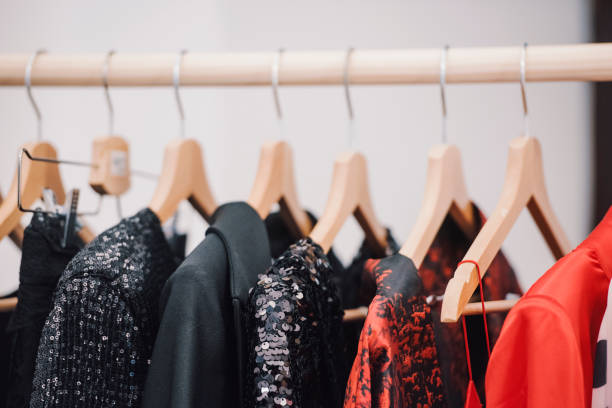
Blending in is sometimes useful. A quiet dress can be perfect for a conservative workplace, a formal ceremony or an occasion where the wearer does not want the clothes to lead. But when the brief is confidence, celebration or simply feeling more like oneself, a dress can do more than disappear politely into the room.
Start with the silhouette, not the trend
Designer dresses become memorable when shape and movement work together. A strong waist, an asymmetric line, a fluid sleeve or an unexpected hem can create presence without relying on excessive decoration. The right silhouette also gives the wearer something to work with. It can move, frame the shoulders, skim rather than cling, or create definition exactly where it is wanted.
Proportion matters because the dress occupies most of the visual field. A voluminous sleeve may need a cleaner skirt. A dramatic length may look strongest with an open neckline. When several elements compete equally, the eye has nowhere to settle.
Print can become the whole conversation
A distinctive print does not need much help. It can supply colour, rhythm and personality in one step, which is useful for anyone who dislikes complicated styling. The easiest way to wear one is often to let it lead. Pull a quieter colour from the print for shoes or a bag, or choose neutral accessories that do not interrupt it.
Cazinc The Label describes its collections as designed in Melbourne, with limited runs and a focus on pieces intended to live beyond a single season. That approach suits printed clothing particularly well. A strong print earns longevity when the cut remains wearable and the garment can move between different settings.
Fabric decides how drama feels
Structure and fluidity create very different kinds of impact. Crisp fabric can hold a sleeve, collar or architectural fold, while softer cloth creates motion. Breathable materials can also make a statement dress easier to wear for longer periods, especially in Australian conditions.
This is where designer dresses should be judged in motion, not only standing still in a fitting room. Sit down. Walk. Raise the arms. Check whether a wrap stays secure, whether the lining moves properly and whether the hem works with the intended shoes. A dress that photographs beautifully but requires constant adjustment will not feel confident for long.
Accessories should support the idea
The more visual work the dress is doing, the less pressure there is on everything else. A simple shoe, clean jewellery and one considered bag may be enough. For a minimalist dress, the balance can reverse: bold earrings, a textured heel or a contrasting belt can create the point of difference.
Layering can extend wear as well. A tailored jacket can sharpen a fluid dress, while a knit can make it more casual. Boots can shift a lighter dress into cooler weather. These combinations matter because a distinctive piece becomes more valuable when it is not tied to one event.
Occasion should shape the styling rather than dictate the personality of the dress. The same piece can feel polished with a heel and structured bag, then relaxed with a flat shoe and softer layer. That flexibility is particularly useful when designer dresses have a strong print or silhouette, because the garment can remain recognisable while accessories change its level of formality.
Choose recognition over approval
The strongest reason to wear designer dresses with presence is not to attract attention for its own sake. It is to make clothing feel aligned with personality. That might mean colour for one woman, unusual proportion for another and immaculate simplicity for someone else.
Not blending in does not require dressing loudly. It requires making a choice that looks deliberate. When the cut, fabric and styling reflect the wearer rather than a generic idea of what is safe, the dress stops functioning as camouflage and starts doing what good clothing can do: making the person inside it feel more clearly herself.