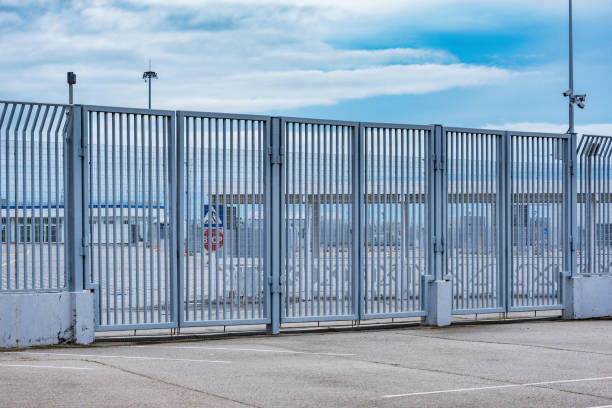
A site can feel secure without feeling hostile. That balance matters for offices, education facilities, commercial premises and industrial properties that still need to welcome staff, customers, contractors or delivery drivers. If a boundary is designed only to look intimidating, it can create confusion, block useful views and make legitimate movement harder. A better approach starts by separating the need to deter unwanted access from the need to keep an active site open and understandable.
The first decision is where control should begin. Some properties need a clear outer perimeter, while others benefit from layered zones that become more restricted closer to valuable assets or sensitive operations. A public-facing forecourt might remain open during business hours, for example, while storage yards and plant areas sit behind controlled barriers. This allows the property to maintain a welcoming front without giving unrestricted movement across the entire site.
Visibility plays a large part in that balance. Open perimeter designs can define space while preserving sightlines from buildings, guard points or cameras. People approaching the site can also see where the legitimate entrance is rather than being confronted by an opaque wall. Where privacy is important, solid sections can be used selectively around particular activities instead of blocking every view. The aim is to control information and movement without creating hidden spaces that are difficult to supervise.
Access points should be designed around real behaviour. Staff tend to use the shortest convenient route, drivers need enough room to queue and turn, and visitors need obvious directions. If the official entrance feels inconvenient, informal shortcuts may develop. Positioning gates logically and supporting them with signs, paths and access-control measures can reduce that pressure. The perimeter then works as a guide as well as a barrier, channelling people towards the correct points instead of simply telling them where not to go.
Good security fencing can also be visually integrated rather than treated as a separate industrial element. Consistent finishes, careful alignment with buildings and restrained planting can make the boundary feel intentional while preserving its role.
Landscaping can soften the appearance of a perimeter, but it should not undermine its function. Low planting may help a boundary sit comfortably within the site while keeping views open. Dense shrubs, stored materials or street furniture placed too close can provide concealment or create a step for climbing. Trees and larger planting also need enough space for future growth so branches do not interfere with cameras, lighting or gates.
Lighting deserves similar care. A brightly lit entry with dark boundary sections nearby may create strong contrast that makes surveillance harder. Even, purposeful lighting can support observation without turning the whole property into a floodlit compound. The design should focus on routes, entrances, gathering points and areas where someone could approach the perimeter unnoticed.
Day-to-day procedures determine whether the physical layout keeps working. That layout only supports the site when gates, locks and access points are used as designed. Gates that are routinely propped open, damaged sections left unrepaired or access cards shared between users can weaken an otherwise sound system. Staff should understand why controls exist and how to report problems. Simple routines often matter more than adding another piece of equipment.
The condition of the boundary should also be checked as the site changes. New parking layouts, construction work, temporary storage or neighbouring development can create climbing aids, blind spots or new approach routes. The security fencing that suited the property at installation may need adjustment when those surroundings change. Periodic review keeps the perimeter aligned with the way the site actually operates.
A welcoming site and a controlled site are not opposites. Clear entrances, good visibility and logical movement can make legitimate access easier at the same time as they make unauthorised movement more noticeable. Rather than closing a property in, security fencing can help organise its edges, protect restricted areas and preserve openness where openness supports the people who are meant to be there.